The Post-Booking Experience: An Overlooked Opportunity for Air Charter Brokers
Learn how air charter brokers can improve post-booking communication, reduce fragmented flight updates and deliver a clearer client experience.

Simon Freund
Co-founder & CEO
Featured

Winning a charter booking requires speed, expertise and trust.
Once the client confirms the flight, however, the experience often changes. The polished sales process gives way to email chains, PDF flight briefs, messages and forwarded updates.
The broker continues working hard behind the scenes, but the client does not always see that work as one clear, connected service.
This is the post-booking gap—and it represents a significant opportunity for air charter brokers.
The client experience does not end when the flight is booked
The period between confirmation and departure contains many of the interactions that shape a client’s impression of a brokerage.
Clients and passengers may need:
A confirmed itinerary
Aircraft and crew information
Departure and arrival details
FBO addresses and directions
Ground transportation information
Catering details
Passport or passenger requirements
Updates when arrangements change
Notes from their broker
These details may also need to be shared with personal assistants, family members, drivers, security teams or other stakeholders.
When everything is communicated through separate emails and attachments, the client becomes responsible for keeping track of the journey.
That is not the experience a premium service should create.
Why traditional flight briefs create friction
A PDF flight brief can be attractive and well prepared. The problem is that it represents a single moment in time.
Private aviation is dynamic. Departure times change. Passengers are added. FBO arrangements are updated. Ground transportation is confirmed. A new version of the brief is then created and sent.
Soon, several versions of the same trip are sitting in different inboxes.
The broker may know which version is current, but the passenger, assistant or driver may not.
This creates unnecessary questions:
Is this still the correct departure time?
Which FBO are we using?
Has the car been confirmed?
Did everyone receive the latest brief?
Is this attachment the final version?
Answering these questions is part of good service. Creating a clearer system that prevents them is even better service.
A live, branded trip experience
A modern post-booking experience gives clients one place to view the latest information about their journey.
Instead of treating every change as a new document, the trip becomes a live experience that can be updated as arrangements develop.
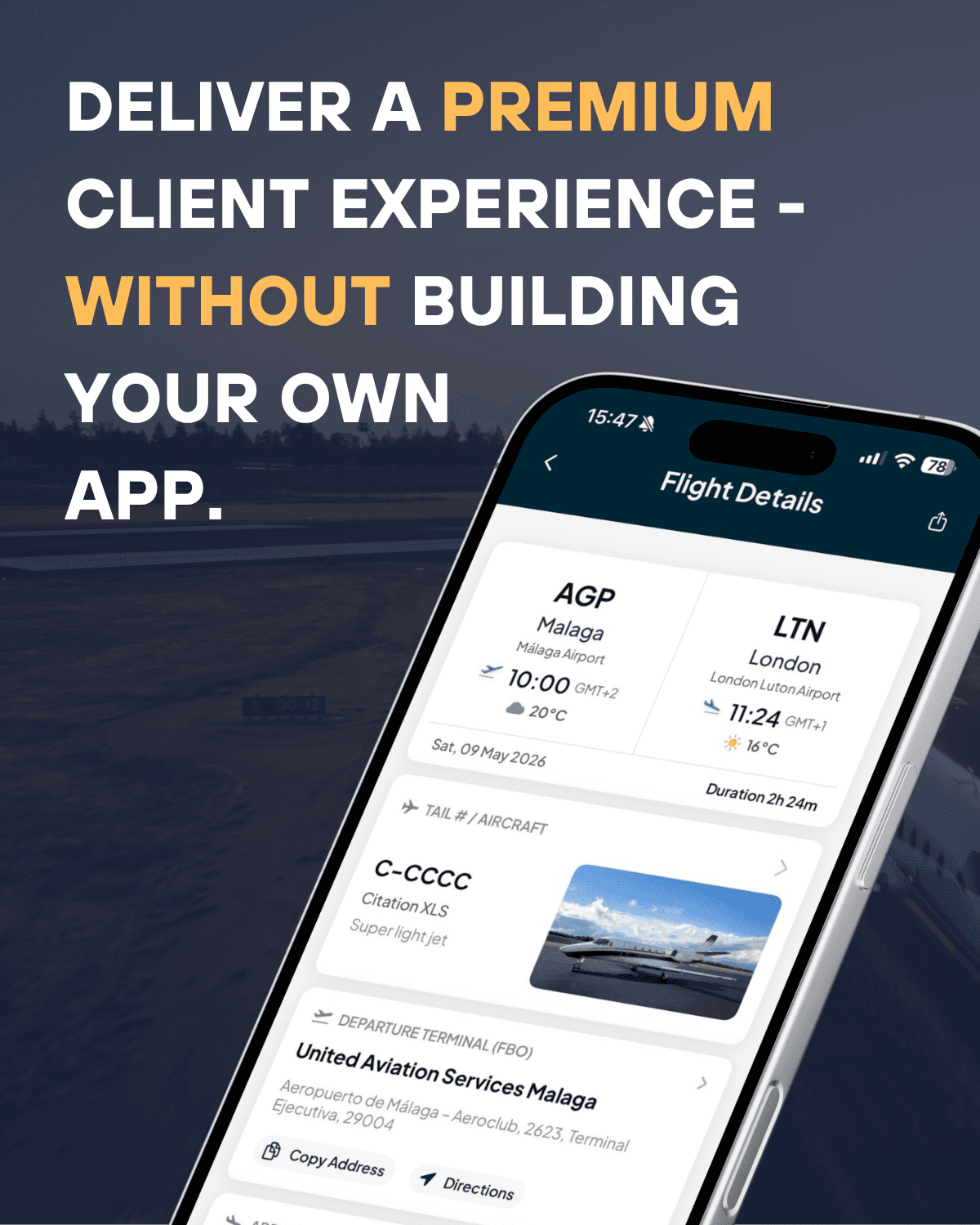
With a branded client app, a brokerage can provide passengers with:
Current trip and flight information
Aircraft and crew details
FBO information and directions
Broker notes
Relevant documents
Notifications when important details change
A clear channel for requests and communication
Assigned passengers can see the trip directly in the app. A flight brief can also be shared with a personal assistant or another stakeholder when needed.
The brokerage remains at the centre of the relationship, while the technology works quietly in the background.
The broker’s brand should remain visible
The client did not book with a software provider. They booked with their trusted charter broker.
That is why the client-facing experience should reflect the broker’s own company, identity and service.
The Private Jet App provides ready-made private aviation infrastructure that brokerages can brand as their own. The broker manages the journey through the platform, while clients interact with a mobile experience associated with the brokerage they already know.
It is similar to the role an ecommerce platform like plays for a retailer: the infrastructure is provided, but the client relationship and brand remain with the business.
Better communication without losing the personal touch
Introducing a client app does not mean removing personal service.
Private aviation will always depend on relationships, judgement and direct human support. The purpose of a better system is to give brokers more time for those valuable interactions.
Routine trip information can remain structured and accessible. Important updates can reach the right people. Clients can check simple details without searching through their inbox or waiting for a response.
When personal attention is needed, the broker is still there.
The difference is that the relationship is supported by a clearer experience.
A stronger post-booking process
For an air charter broker, modernization does not need to begin with a complete replacement of its sales or operating systems.
It can begin with a focused question:
What happens after the client says yes?
Improving that part of the journey can reduce repetitive communication, strengthen the company’s brand and give clients greater confidence that every detail is under control.
The flight may be operated by another company. The client experience still belongs to the broker.
The Private Jet App helps air charter brokers make that experience clearer, more consistent and entirely their own.
Want to see how it works?
If your brokerage wants to provide clients with a branded mobile experience for trips, updates and communication, we would be happy to give you a short walkthrough.